On This Page
A single rodent sighting in a busy Manhattan restaurant kitchen, or a trail of ants across an office break room, can cost far more than a service call. It can trigger a health inspection, unsettle tenants, and put a hard-earned reputation on the line. That is why commercial pest control in NYC works best as an ongoing program rather than a one-time reaction.
This guide is written for restaurant owners, office managers, and property managers comparing providers across New York City and Westchester. You will learn what a complete commercial pest management program should deliver, what NYC Health Code Article 151 requires of property owners, and how a neutral checklist can help you judge any provider. Along the way, Rye Pest Solutions' preventative maintenance programs and customized treatment plans serve as a practical example of what to look for. By the end, you will have a clear framework for evaluating any proposal and a solid set of next steps for your building or business.
What a Commercial Pest Management Program Should Deliver
A commercial pest control program in NYC is a recurring service with a defined scope, records, and accountability. It is not a visit you schedule after you see something. That distinction matters when you compare proposals, because a program should explain what happens between sightings, not only what happens after one.
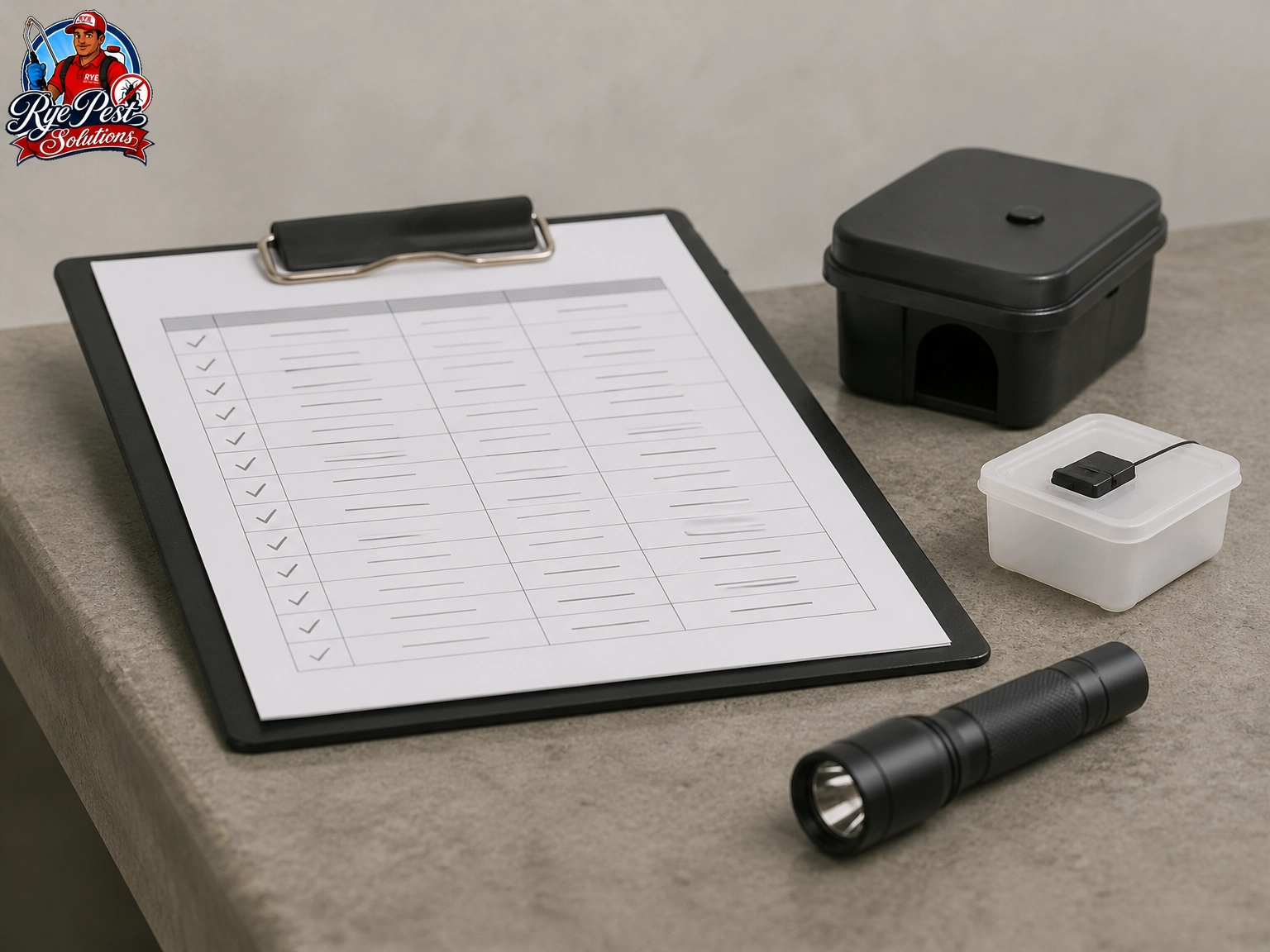
NYC Health Code Article 151 defines pest management as ongoing prevention, monitoring, and pest control activities, including eliminating conditions that attract pests. The code places the duty to keep a property free of pests on the "person in control," meaning the owner, managing agent, or occupant. A service agreement does not shift that duty away from the owner.
Before signing, a decision-maker should be able to review four things: a written scope of work, a named point of contact, an inspection schedule with a stated rationale, and a sample service report. Ask how the schedule was built for your property. In NYC commercial settings, buyers should ask how the plan accounts for conditions such as shared walls in mixed-use buildings, rear garbage areas, loading and delivery traffic, and utility penetrations in sub-basements. The answer should reflect your building rather than a template.
For a closer look at the service model, see commercial pest control in NYC and local pest control services. That clarity is the baseline for judging any provider.
Why Treating Sightings Alone Rarely Holds Up
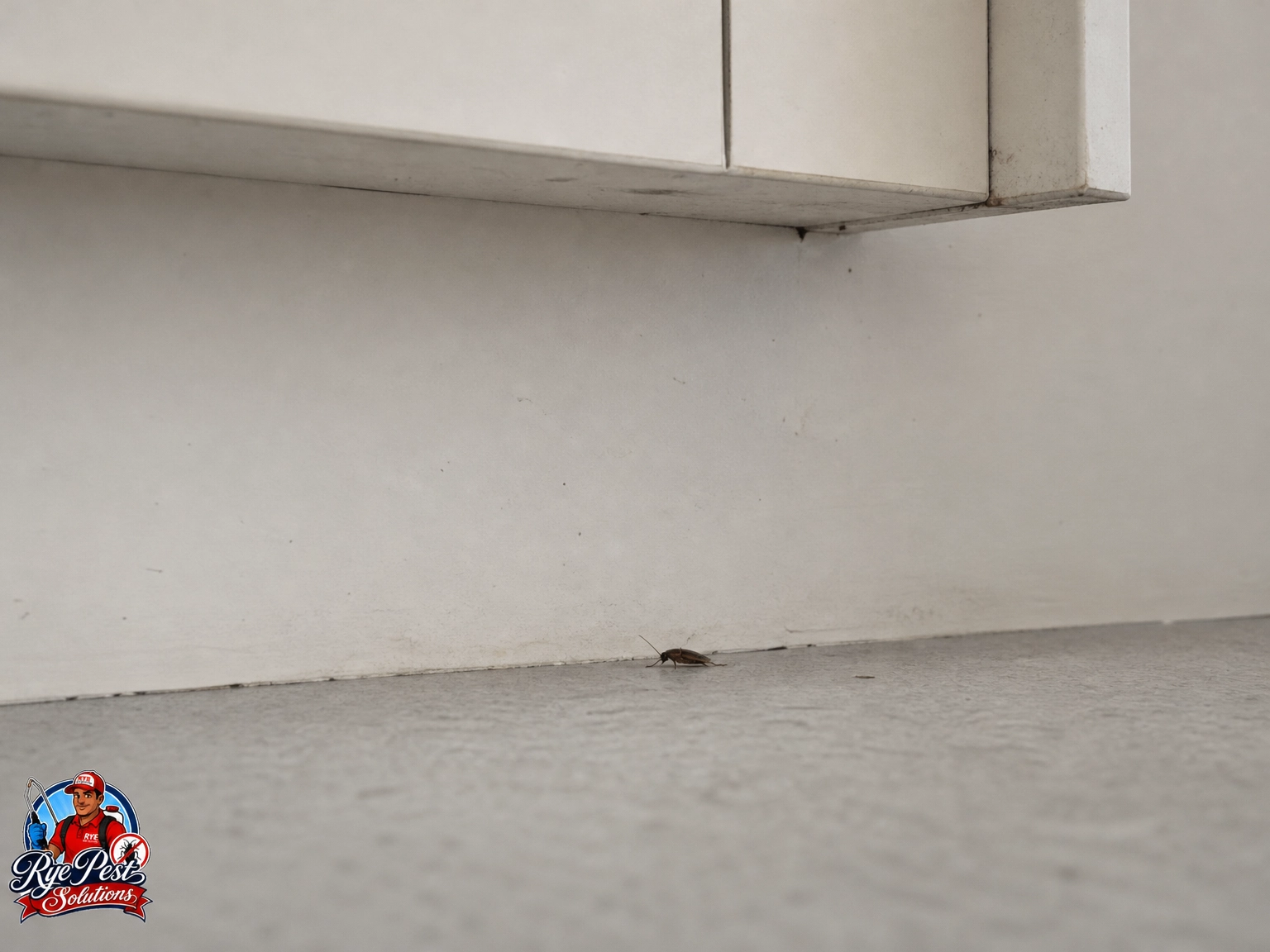
The distinction matters most when a property waits for a sighting before calling anyone. In our experience in busy NYC buildings, activity reaches management only after the conditions behind it are established. A sighting is a lagging indicator, not a measurement of how much pest pressure exists. The NYC Health Department steers operators toward fixing conditions that attract pests, such as leaks, cracks and holes in walls, and common-area clutter, because those conditions generate the activity.
Reaction-only service also carries an awkward cost shape. Callouts arrive unpredictably, often after hours, and no one can forecast pest spending across a fiscal year. Treating a busy restaurant kitchen or an occupied office floor can also mean working around prep lines, service hours, and staff traffic, which adds disruption that is hard to plan for.
Multi-tenant buildings expose the same weakness. Pests can travel shared plumbing, shafts, and wall voids, so a treated unit can be reinvaded from the space next door.
Compliance adds another layer. Under Article 151, duties attach to the property, not to how often the owner calls a vendor, and pest management is defined as ongoing prevention and monitoring. A sighting-driven approach leaves a gap between the problem and the response, and that gap is what inspectors and tenants notice first.
Callout contracts rarely explain what happens between visits, so review the service terms before signing and compare the schedule against how your building actually operates.
The Five Parts of a Real Commercial Pest Program
A sighting-driven approach leaves gaps. A complete program closes them by design, and it comes down to five working parts.
Inspection and risk assessment. A technician walks the property to map entry points, utility penetrations, garbage and grease storage, receiving areas, and harborage, then documents what was found and what needs fixing.
Monitoring. Devices are placed at known pressure points and checked on a set cadence, so activity is caught between visits and tracked over time instead of surfacing through a customer complaint.
Exclusion work. Sealing gaps, fitting door sweeps, screening openings, and repairing the conditions that let pests in. The city's pest proofing guidance treats openings larger than a quarter inch as a baseline for that work. Ask for it in writing.
Documentation. Written service reports covering findings, treatments, and recommendations, in a form you can hand to a health inspector, a landlord, or a building owner without editing. Learn what inspectors expect to see in that file before you assume a stack of tickets is enough.
Scheduled preventive visits. A recurring calendar built around the property and its seasonal pressure, reviewed and adjusted as monitoring data comes in.
Now consider what happens when a piece goes missing. Without monitoring nobody knows what occurred between visits, and without exclusion you keep treating conditions nobody repaired; strip out documentation and you lose the proof that conditions were addressed, and cut preventive visits and the calendar stops matching the building's real pressure points.
Rye Pest Solutions structures its commercial pest control work in NYC and its preventative maintenance programs around all five parts. New York City's health code then sets out the legal duty that sits alongside that service standard.
What NYC Health Code Article 151 Actually Requires
Those five components also line up with city law. Article 151 of the NYC Health Code defines pest management as ongoing prevention, monitoring, and control, and it places the duty on the "person in control."
That phrase means the owner, part owner, managing agent, or occupant with custody of the premises. Whoever that is must prevent and control harborage and pest movement, and the property has to be free of pests. That obligation stays with the owner even when a vendor is hired.
Garbage rules land fastest on restaurants and property managers. Refuse and recyclables must sit in tightly covered, watertight, rodent-resistant receptacles until scheduled pickup.
Where the Department of Health determines a written pest management plan is needed, it must include strategies, a routine inspection schedule set by the person in control, actions to take when pests are present, and instructions for reporting pests. A copy stays on site, and a sign goes at building entrances where specified. Reporting instructions matter more than they look. Early reporting keeps problems small, which is why bed bug treatment in NYC tends to be an inspection-and-follow-up process rather than a single spray.
Here is the detail buyers miss: the code sets no inspection interval. It assigns the schedule to the person in control, so a provider should be able to explain why the cadence fits your building rather than quoting a standard one.
New York State adds a layer. Pesticide applicators and application businesses are regulated under Article 33 of the Environmental Conservation Law, so confirm current requirements with the DEC.
Article 151 is New York City code. For commercial pest control in Westchester County, requirements vary by municipality, and the local health department is where to confirm what applies.
A Neutral Checklist for Judging Any Provider
Article 151 sets the standard. These six questions tell you whether a provider actually meets it.
How was the inspection schedule set, and what is it based on? Ask for the reasoning behind the interval, not the interval itself.
What gets recorded, and who receives it? Request a sample report before you sign. A usable sample shows the specific conditions found and what was done about each.
What physical work is in scope? Ask who seals gaps, replaces door sweeps, and repairs a dock door.
How do they handle access and product choice? After-hours entry, tenant notification, and product selection for kitchens, childcare areas, or occupied office floors all signal commercial experience. Concrete answers here are a good indicator of how the relationship will run.
How are applicator credentials verified? New York State regulates pesticide applicators and application businesses, so the provider should be able to explain how a buyer confirms their standing through the state pesticide program.
Does the plan map to Article 151? For a New York City property, ask how the service plan lines up with the code's written plan elements. In Westchester, ask which municipal requirements apply and who confirms them.
Price is the last filter, not the first. Compare a recurring program against single-treatment invoices, since one-off pricing, such as bed bug treatment costs in the Bronx, measures a different scope of work entirely.
The most reliable way to run this checklist is on your own property. Walk the building with a prospective provider, ask each question on site, and see whether the answers reference your conditions or a template. That walkthrough is also the fastest way to see how a preventative program would be built around your operation.
What This Looks Like for Restaurants, Offices, and Property Managers
Those questions apply to any commercial property, but the answers change by setting.
Restaurants. The pressure points are predictable: garbage and grease storage, receiving doors, dish and prep areas, and the narrow window between service periods. Documentation carries the most weight here, because a written service record is what shows an operator was managing pests between health inspections, not only reacting to a sighting.
Offices. Access and discretion shape the plan. Visits often land after hours, product choices have to suit occupied floors, and monitoring belongs in break rooms, mail rooms, and receiving areas where people actually leave food. For Manhattan commercial properties in shared buildings, coordinating with building management matters as much as the treatment.
Property managers. The view has to be building-wide: multi-tenant reporting, shared compactor and trash rooms, and common-area monitoring.
Mixed-use and portfolio properties. Track sightings by unit and by area, so a repeated problem at one riser or trash room gets handled as a building issue instead of a series of unrelated calls.
Seasonal rhythm. The calendar should follow the building. Rodent pressure builds indoors as temperatures drop, and warm weather brings its own activity, so a schedule set from the contract start date alone tends to arrive late.
Rye Pest Solutions builds preventative maintenance programs for restaurants, offices, and property managers across the five boroughs and Westchester, backed by certified technicians, MBE certification, and a family-owned, locally based team.
Next Steps for Your Building or Business
Taken together, the choice comes down to how you price it. Compare the annual program against unplanned callouts, disrupted service, and the exposure of an inspection that finds conditions you cannot document as addressed. A single treatment invoice rarely captures those costs.
Then move in order. Pull your property's actual conditions: entry points, trash and compactor areas, receiving doors, shared shafts, and past sighting reports. Ask every provider the checklist questions above, and request written scopes you can compare line by line, including inspection cadence, monitoring, exclusion, reporting, and after-hours access. For multi-tenant properties, ask how scopes handle shared areas and unit-to-unit reporting, the same questions that shape commercial pest control for apartment complexes.
Confirm compliance at your specific address before signing. NYC Article 151 applies in the five boroughs; Westchester requirements vary by municipality, so verify with the local health department rather than assuming the codes match.
Ready to move from comparison to a plan? Book a commercial property assessment with Rye Pest Solutions, and the team will walk your building, document conditions, and outline a scope you can judge against any other proposal.
Conclusion

A commercial pest program is a documentation and prevention system, not a stack of callouts for sightings. The strongest proposals spell out the five parts of a real program, account for shared areas and unit-to-unit reporting in multi-tenant buildings, and show how they will help you meet NYC Health Code Article 151 at your specific address. Compare those written scopes line by line, and weigh the annual cost against disrupted service, unplanned callouts, and the exposure of an inspection that finds conditions you cannot document as addressed.
Then take the next step: book a commercial property assessment with Rye Pest Solutions. The family-owned, locally based team will walk your building, document conditions, and outline a scope you can judge against any other proposal. Start with your property's actual conditions, and the right program becomes easier to see.