Ants
Formicidae
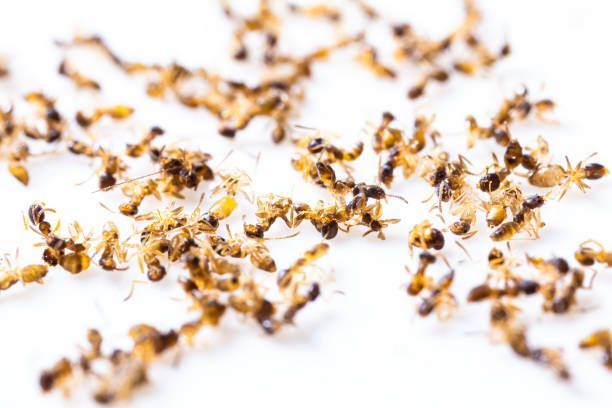
Ants are social insects that live in large colonies. They frequently invade homes in search of food and water, becoming a major nuisance in kitchens and pantries.
On This Page
Jump To Section:

Danger Level: Low to Moderate
Most house ants are a nuisance, though some species like carpenter ants can cause structural damage, and others can contaminate food.

Activity: Diurnal/Nocturnal
Ants can be active at any time, constantly foraging for food and bringing it back to their colony.
Appearance
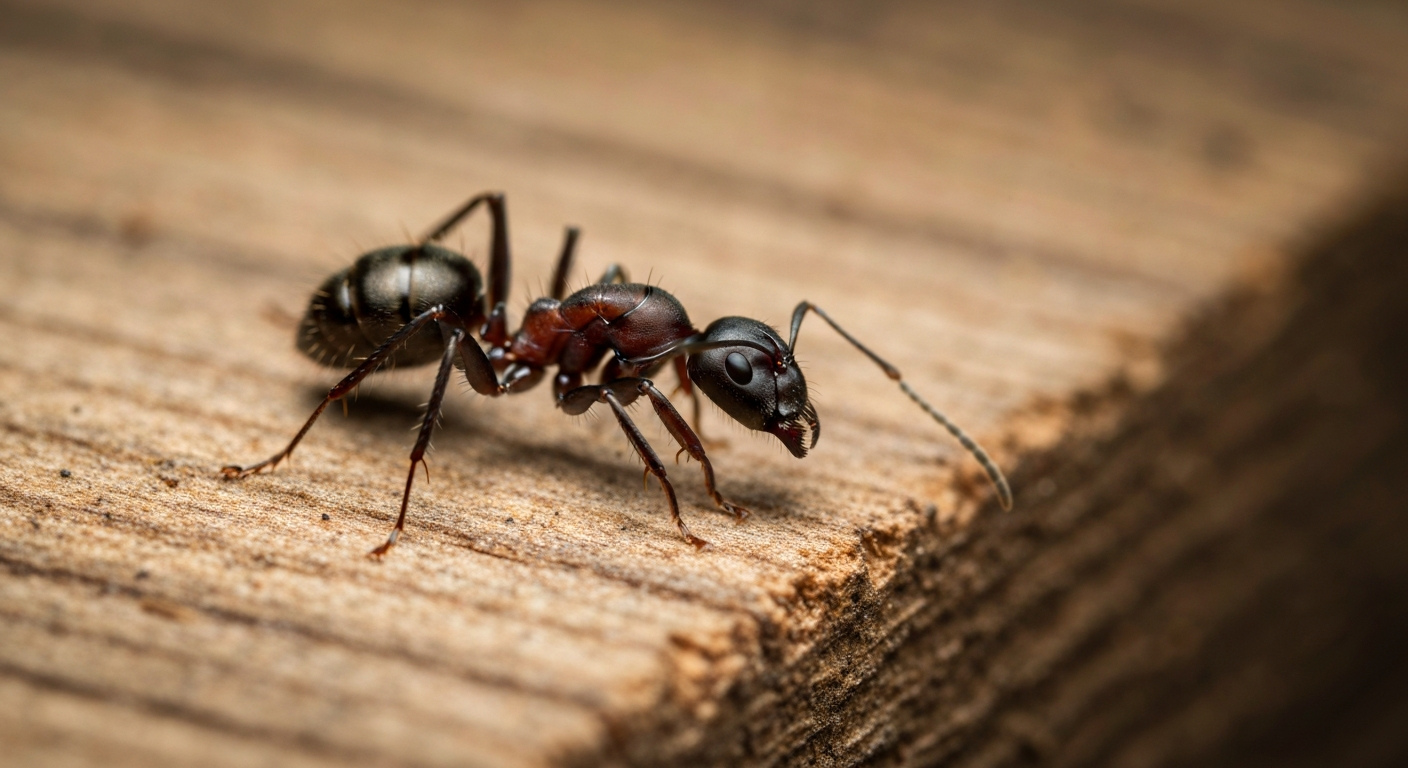
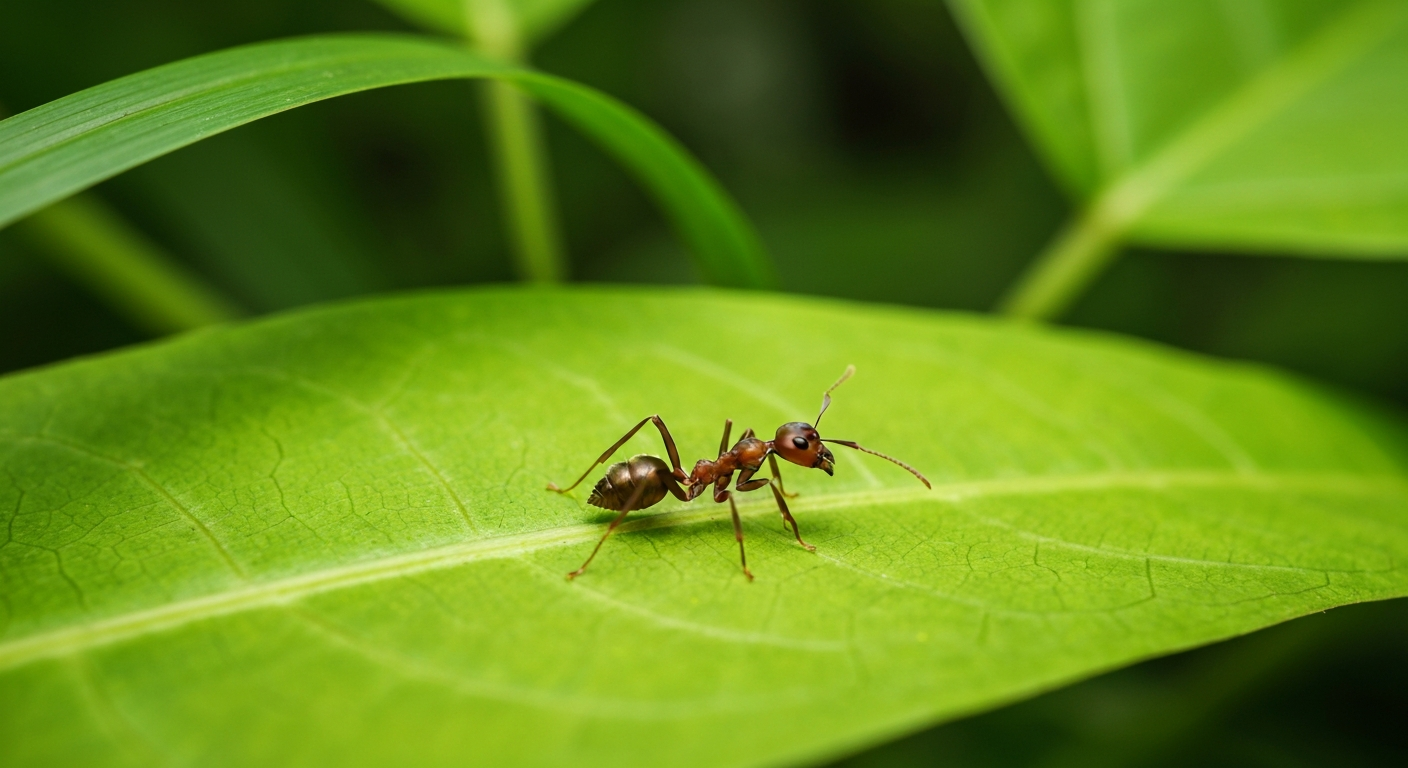
Ants have a distinct three-part body (head, thorax, and abdomen) with a narrow waist and prominent antennae. Size and color vary greatly by species.
- Three distinct body segments
- Elbowed antennae
- Colors range from black and brown to red
- Ranging from 1/16 to 1/2 inch in length
Image Gallery

Behavior & Habitat
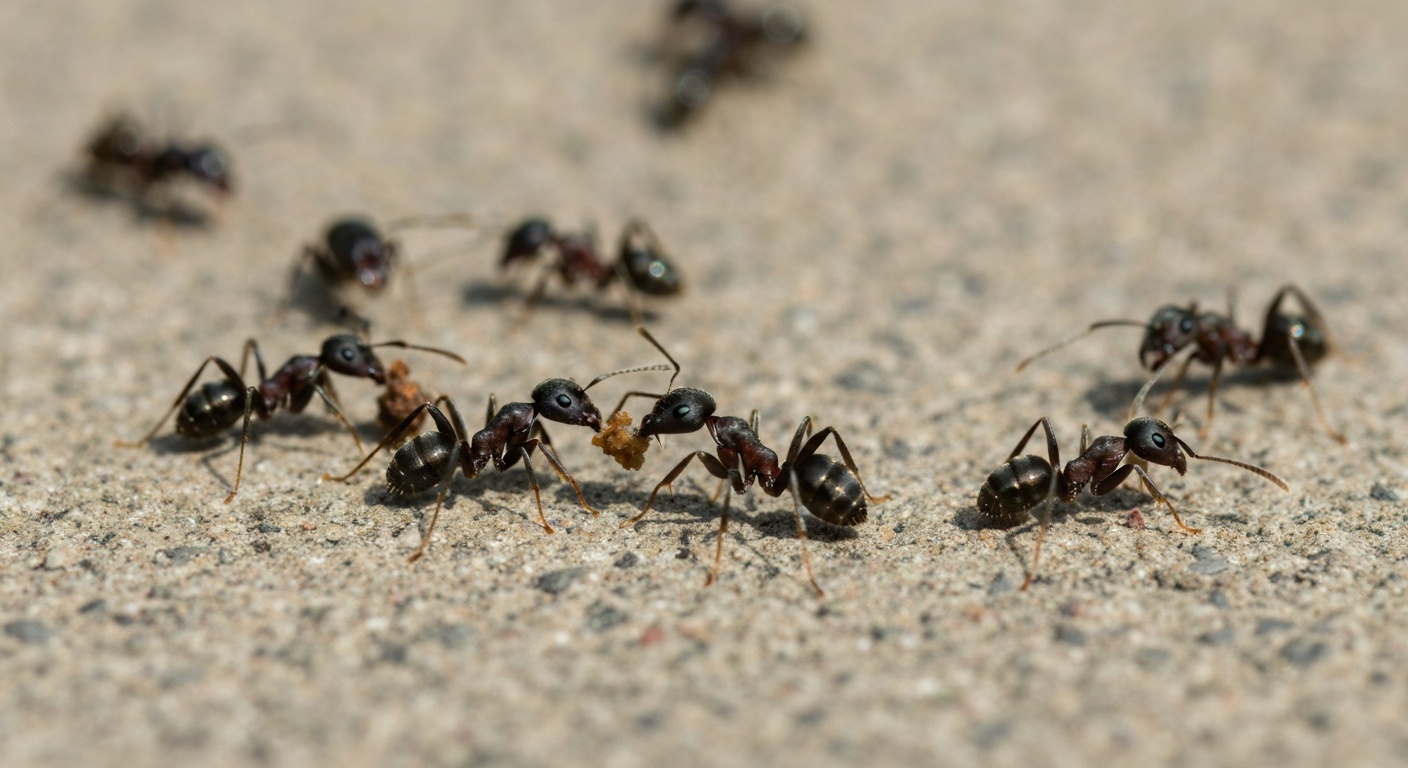
Ants leave invisible chemical trails (pheromones) for others to follow once they locate a food source, leading to rapid infestations.
Common Hiding Spots
- • Inside walls
- • Under foundations
- • Near moisture sources
- • In rotting wood
- • Under appliances
How They Spread
- • Following scent trails
- • Expanding colonies
- • Seeking warmth in winter
- • Searching for sweets and proteins
Life Cycle
Ants undergo complete metamorphosis, passing through four distinct stages.
1. Egg
Queens lay tiny, oval-shaped white eggs.
2. Larva
Legless, grub-like larvae that rely on adults for food.
3. Pupa
A resting stage where the ant develops into its adult form.
4. Adult
Fully formed ant taking on roles like worker, soldier, or reproductive.

Egg Stage
Signs of Infestation
Ant Trails
Visible lines of ants moving to and from a food source.
Frass
Small piles of wood shavings (specific to carpenter ants).
Nests
Small piles of dirt or soil around foundations.
Prevention Tips
Clean up food and drink spills immediately.
Store food in airtight containers.
Seal cracks and crevices around doors and windows.
Eliminate standing water and fix leaks.
Ready to Get Rid of Ants?
Contact Rye Pest Solutions today for a thorough inspection and effective treatment plan. Don't let the problem multiply.